Supplier Disputes Involving Dezhou, China
New energy & photovoltaics · Automotive parts & components · Food processing & agricultural products · Sports equipment & fitness products
Contact a China LawyerManufacturing & Trade Landscape in Dezhou
Dezhou is a rapidly developing industrial city in northwestern Shandong Province, strategically located at the crossroads of Shandong, Hebei, and Henan provinces. The city has developed world-class industrial clusters in new energy and photovoltaic technology, automotive parts and components, food processing and agricultural products, sports equipment and fitness products, and glass products.
Dezhou is particularly renowned for its solar energy industry, being one of China's leading solar water heater and photovoltaic manufacturing bases, producing solar thermal collectors, solar panels, and renewable energy systems for domestic and international markets. The city is also a significant automotive parts manufacturing hub, producing components including engine parts, braking systems, electrical systems, and chassis components for major automakers. In addition, Dezhou's food processing industry, including meat processing, grain processing, and beverage production, supplies products to markets across China and overseas, while its sports equipment sector manufactures fitness equipment, gym equipment, and sporting goods for export worldwide.
International buyers frequently source solar products, automotive components, processed foods, sports equipment, and glass products from Dezhou's manufacturers. However, the scale and diversity of Dezhou's industrial sector also create significant legal challenges for overseas buyers, including quality control issues, delivery delays, payment disputes, and product compliance problems.
Common Legal Risks in Dezhou Supply Chains:
- Quality & Specification Failures: Solar panels failing efficiency or durability tests; automotive parts not meeting dimensional or material specifications; food products not meeting safety or quality standards; sports equipment failing safety or performance requirements.
- Production & Delivery Delays: Raw material shortages, seasonal production constraints, and logistics bottlenecks frequently disrupt supply chains.
- Deposit & Payment Disputes: Suppliers may demand advance payments and subsequently fail to deliver products, deliver non-conforming goods, or refuse to refund deposits.
- Unauthorized Subcontracting: Factories may outsource production to unknown facilities without buyer approval, compromising quality control and traceability.
- Product Liability & Compliance Issues: Export products failing to meet target market regulatory requirements, resulting in customs detention, fines, or liability claims.
- Food Safety & Traceability Concerns: Increasing regulatory requirements for food and agricultural product imports create significant compliance risks.
- Contractual Disputes: Ambiguous terms in supply agreements, OEM contracts, and distribution arrangements often lead to prolonged legal conflicts.
If your company is facing disputes with a Dezhou supplier relating to quality defects, delivery failures, deposit recovery, or contractual breaches, early legal intervention significantly improves your ability to preserve evidence, recover financial losses, and enforce your legal rights in China.
Common Dezhou Supplier Disputes
Dezhou's diverse industrial base creates recurring legal issues that frequently affect international buyers:
New Energy & Photovoltaic Products
Disputes involving solar water heaters, solar panels, and renewable energy systems. Efficiency failures, degradation issues, and performance guarantee disputes are common concerns.
Automotive Parts & Components
Disputes involving engine parts, braking systems, electrical systems, and chassis components. Quality defects, dimensional variances, and warranty issues frequently arise.
Food Processing & Agricultural Products
Disputes involving meat products, grain products, and beverages. Food safety violations, shelf life issues, and packaging non-compliance frequently occur.
Sports Equipment & Fitness Products
Disputes involving fitness equipment, gym equipment, and sporting goods. Safety failures, durability issues, and warranty disputes are common issues.
We regularly represent foreign clients in disputes involving manufacturers and suppliers located in Dezhou, Linyi, Jinan, and other industrial centers throughout Shandong Province. Our team can coordinate supplier investigations, evidence preservation, negotiations, litigation filings, and enforcement proceedings without requiring clients to travel to China.
Our Strategic Legal Approach
- Immediate Evidence Preservation: Secure contracts, purchase orders, technical specifications, engineering drawings, inspection reports, laboratory analyses, quality documentation, food safety records, and electronic communications including WeChat and email correspondence.
- Supplier Investigation & Due Diligence: Verify the factory's operational status, production capacity, financial condition, asset availability, and regulatory compliance to determine the feasibility of recovery.
- Strategic Negotiation & Legal Pressure: Issue formal attorney demand letters and engage in direct negotiations to achieve commercial settlements without resorting to litigation.
- Litigation & Asset Preservation: When necessary, file lawsuits and apply for property preservation measures to freeze bank accounts, inventory, equipment, or other assets before they are dissipated.
- Judgment Enforcement & Debt Collection: Pursue court-ordered enforcement and asset tracing to recover outstanding amounts even after obtaining a favorable judgment.
Frequently Asked Questions
Common legal inquiries regarding supplier disputes, export manufacturing, product quality issues, and commercial litigation involving manufacturers in Dezhou.
If you are dealing with a supplier dispute in Dezhou, contact us for an initial assessment .
Responsible Lawyers
The following PRC-licensed attorneys are responsible for handling supplier disputes, commercial litigation, debt recovery, and related legal matters involving Dezhou-based manufacturers and suppliers.

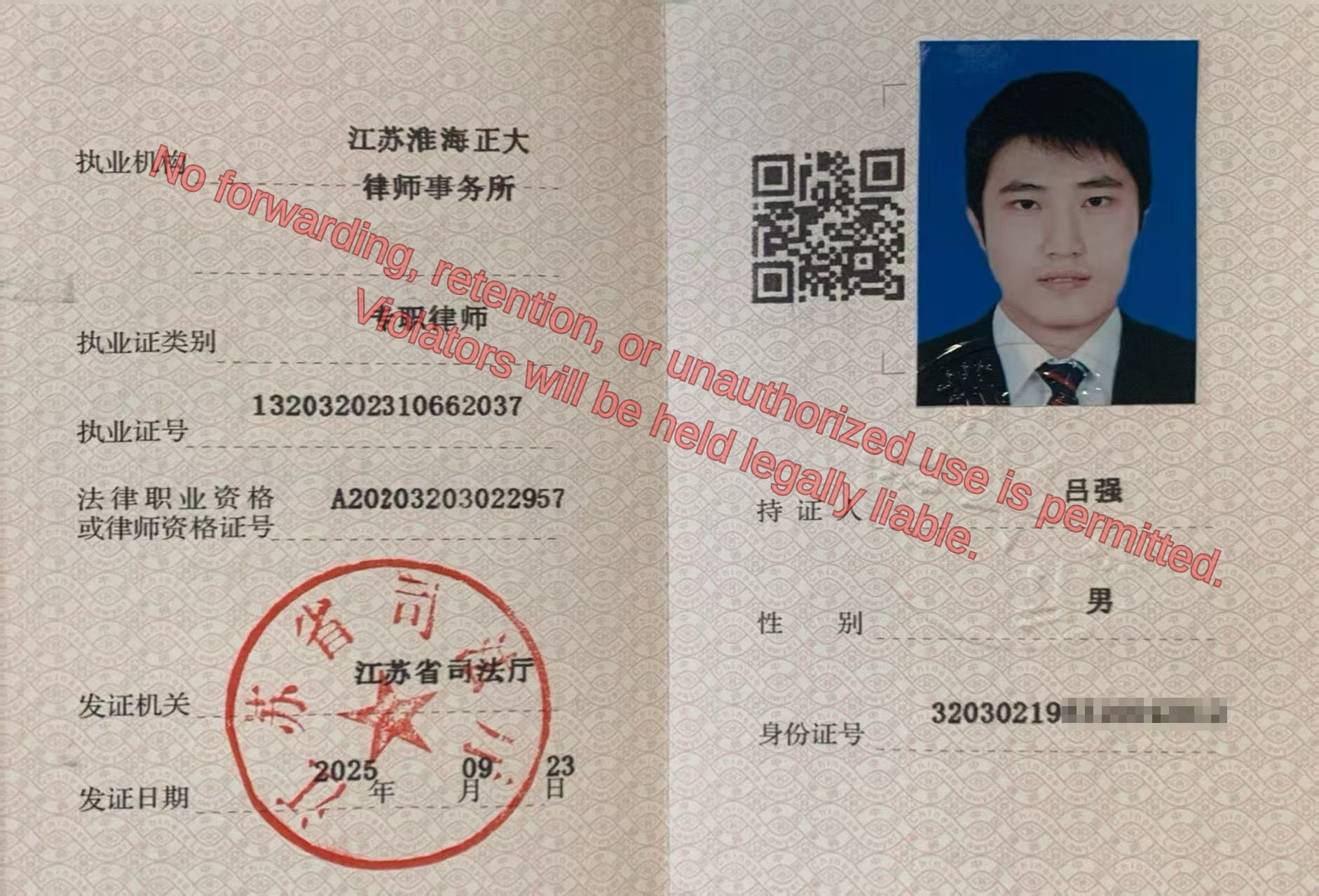
Qiang Lyu
Attorney-at-Law (PRC)
Education: B.A., LL.M.
License No. 13203202310662037
Languages: English · Mandarin Chinese · Japanese

Liang Zhu
Attorney-at-Law (PRC)
Education: B.S., LL.B.
License No. 13203202310613140
Languages: English · Mandarin Chinese

Tao Dong
Attorney-at-Law (PRC)
Education: B.S., LL.B.
License No. 13203202310603090
Languages: English · Mandarin Chinese

Ke Yang
Attorney-at-Law (PRC)
Education: LL.B.
License No. 13203202210417710
Languages: English · Mandarin Chinese